
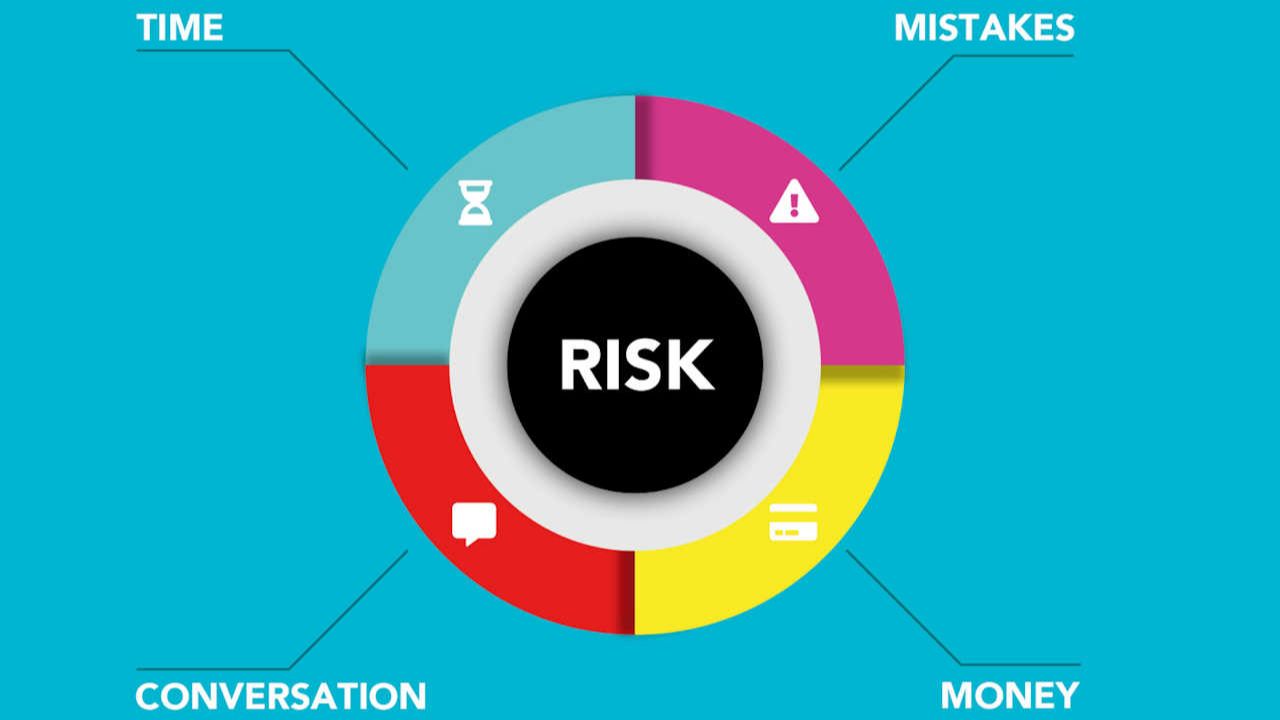
Projects are, by definition, uncertain endeavors. Even the most carefully planned initiatives encounter unexpected challenges, changing conditions, and emerging opportunities along the way. Yet many projects are still struggling. Not because there are risks, but because those risks were not managed effectively.
Projects rarely fail because of a single catastrophic event. Instead, they drift off course as small issues accumulate, warning signs are missed, and teams react too slowly to changing conditions. A thoughtful approach to risk management helps prevent these situations by encouraging teams to think ahead, communicate openly, and respond quickly when challenges arise.
The good news is that risk management does not need to be complex to be effective. By focusing on a few practical principles, project managers can dramatically improve the likelihood of successful project delivery.
Risk Management Should Be Tailored, Not Skipped
One of the most common mistakes in project management is skipping risk management altogether. Teams working on smaller or fast-moving projects often assume the process will take too much time or create unnecessary paperwork.
Rather than abandoning risk management, a better approach is to scale and tailor the process to the project's needs. A large, complex program might require detailed analysis and extensive documentation, while a smaller project may only need a brief discussion and a simple risk log.
The key point is that the exercise itself has value. Even a short conversation about potential risks forces the team to think ahead and consider what might go wrong or go surprisingly well. This proactive thinking helps team members recognize warning signs early and respond more effectively when unexpected events occur later in the project. Simply put, risk management is less about predicting the future and more about preparing the team to deal with it.
Establishing a Strong Risk Management Foundation
A solid risk management process begins with a clear plan. A risk management plan defines how the project will identify, analyze, respond to, and monitor risks throughout the project lifecycle.
While some teams view this document as unnecessary overhead, it often becomes one of the most valuable tools in the project manager’s toolkit. A well-written risk management plan provides clarity and consistency for the entire team. It establishes expectations for how risks will be handled and ensures everyone is working from the same playbook.
Another important advantage is that risk management plans are frequently reusable. Once an organization has developed a solid framework, it can be adapted and updated for future projects rather than created from scratch each time. Over time, this approach strengthens organizational processes and improves overall project maturity.
Recognizing That Risks Include Opportunities
When people hear the word “risk,” they often think only of negative events. However, professional project management defines risk more broadly. A risk is any uncertain event that could affect project objectives, either positively or negatively. This means risks include both threats and opportunities.
Threats are the uncertainties that could delay the schedule, increase costs, or reduce quality. Opportunities, on the other hand, are situations in which uncertainty can lead to beneficial outcomes. For example, a new technology might allow a team to complete work faster than expected, or a supplier might offer an unexpected discount that lowers project costs.
By focusing only on threats, teams miss valuable opportunities to improve project outcomes. In fact, careful analysis of potential threats sometimes reveals hidden opportunities. A supply chain risk might prompt the team to explore alternative vendors that ultimately offer better service or pricing. Encouraging teams to look for both positive and negative risks fosters creativity and promotes a more balanced view of uncertainty.
Focusing on the Risks That Matter Most
Many project teams make another common mistake during risk management activities: they identify far too many risks and attempt to treat them all equally. Large projects can easily generate dozens, or even hundreds, of potential risks. Attempting to monitor and discuss every one of them can quickly overwhelm the team and dilute attention from the most important issues.
Effective risk management requires prioritization. Instead of reviewing every possible risk during status meetings, teams should focus primarily on the handful of risks that have the greatest potential impact on current project activities.
In many cases, this means concentrating on the top five to ten risks at any given time. These are the uncertainties most likely to influence immediate decisions and actions. Lower-priority risks should still be documented and periodically reviewed, but they do not need constant attention. This focused approach helps teams use their time more effectively and ensures that risk discussions remain meaningful rather than routine administrative exercises.
Using Structured Processes to Reduce Bias
Risk analysis can be surprisingly subjective. Different team members may have very different opinions about how likely a risk is to occur or how severe its consequences might be. Personal experiences, optimism, and even group dynamics can influence these assessments. This is why structured risk management processes are so valuable.
Using consistent methods for evaluating probability and impact helps teams move beyond opinions and toward more objective analysis. Structured approaches also reduce the chance of groupthink, in which individuals may hesitate to challenge the group's consensus.
Similarly, defined processes for developing risk responses ensure that teams consider a full range of possible strategies, such as avoiding the risk, mitigating its impact, transferring responsibility, or accepting it with a contingency plan. A disciplined process does not eliminate uncertainty, but it helps teams make better decisions when confronting it.
Risk Management Must Continue Throughout the Project
Another widespread misconception is that risk management is something completed during the planning phase of a project. Teams often conduct a risk identification workshop at the beginning of the project, document the results, and then rarely revisit them. Risk management should be an ongoing activity throughout the entire project lifecycle.
Projects are constantly evolving. New stakeholders join the effort, technical challenges emerge, market conditions change, and scope adjustments occur. Each of these developments can introduce new risks or alter the significance of existing ones.
Effective project managers continuously guide the team through monitoring risks, identifying new uncertainties, and reassessing earlier assumptions. This ongoing attention ensures that the project remains prepared for whatever challenges may arise.
Encouraging Open and Transparent Risk Communication
One of the most important elements of effective risk management is creating an environment where team members feel comfortable discussing uncertainty. In some organizations, people hesitate to raise potential problems for fear of criticism or blame. Unfortunately, this culture can prevent risks from being identified until it is too late to address them effectively.
Project managers can help prevent this situation by encouraging open and transparent communication about risks. Team members should understand that identifying a potential risk is not a sign of failure; it is a sign of professionalism and foresight. When teams openly discuss uncertainty, they are far more likely to identify emerging issues early and develop practical solutions before those issues become serious problems.
Integrating Risk Reviews into Regular Project Activities
Risk management should not become a separate, time-consuming activity that disrupts normal project operations. Instead, it works best when integrated into existing project communication practices.
One practical approach is to include a brief discussion of key risks in regular status reviews or project reports. During these discussions, the team can review the most significant current risks, evaluate the effectiveness of mitigation strategies, and identify any new uncertainties that may have emerged. By focusing on the most important risks, these discussions remain productive and concise while keeping uncertainty visible to the entire team.
Managing Risk Through Change Management
Projects rarely proceed exactly as originally planned. Changes to scope, schedule, resources, or technology are almost inevitable. Each of these changes has the potential to introduce new risks or alter the probability of existing ones. For this reason, risk evaluation should be integrated into the project’s change management process.
Whenever a change request is considered, the team should also ask important risk-related questions. Could this change introduce new uncertainties? Does it increase the likelihood or impact of any previously identified risks? Will additional mitigation strategies be necessary? By incorporating risk analysis into change management, teams can avoid unintentionally creating new problems while attempting to solve existing ones.
Empowering the Team to Respond to Risks
Although project managers play a central role in coordinating risk management activities, they cannot monitor and respond to every risk on their own. Many risks are best addressed by the team members closest to the work.
Empowering team leaders and key contributors to implement risk response strategies ensures that issues can be addressed quickly when they arise. These individuals often have the expertise and situational awareness necessary to act effectively. Regular communication between the project manager and team leaders helps ensure that risk responses remain aligned with overall project objectives while allowing the team to respond quickly to emerging situations.
Successfully Navigate Uncertainty
Uncertainty is an unavoidable part of every project. Attempting to eliminate all risks is neither realistic nor necessary. The true goal of risk management is to ensure that teams are prepared to recognize uncertainty and respond thoughtfully when it occurs.
By tailoring risk management processes to fit the project, documenting a clear approach, recognizing both threats and opportunities, and focusing attention on the most significant risks, project managers can dramatically improve their chances of success.
Equally important, risk management must continue throughout the project's lifecycle. Open communication, regular monitoring, and integration with other project processes ensure that risks remain visible and manageable.
Organizations that adopt these practical risk management practices gain more than just improved project performance. They develop teams that are better prepared, more adaptable, and more confident in navigating the uncertainties that accompany every ambitious endeavor.
Related Articles
Reaction to Readiness: Building a Process for Risk Response Planning
How Much Risk Management is Enough: Finding the Right Balance
How to Sell Risk Management to a Project Sponsor
Resources:
What is Risk Management and Why is it Important?
Risk Assessment Framework: Successfully Navigating Uncertainty
Subscribe for Our Project Management Resources, Best Practices, and Tips
Confirm your subscription to receive an email with immediate download access to Project Manager's Resources, a valuable list of books and web sites.
Get the latest tips and updates sent directly to your inbox monthly.
We hate SPAM. We will never sell your information, for any reason.